5030 Champion Blvd, Ste. F5 Boca Raton, FL 33496.
 561-989-0107


Why Do Gums Bleed When You Floss?
When carrying out your oral hygiene routine have you ever noticed a bit of blood when flossing or brushing? If so, you should know that even a small amount of blood could be an early sign of a problem. Maybe it’s something as small as needing to be more consistent with flossing, or the development of Gingivitis. If the bleeding doesn’t stop within a week or two of consistent flossing, it may be time for gum disease care.
Figuring out the cause of gum bleeding is important in order to prevent a small problem from becoming a progressive dental disease over time.
In this article, we’ll discuss bleeding when brushing and flossing. This content is not meant to scare you, but simply to help you understand that bleeding is not always caused by a dental condition. While other times it’s a warning of a developing problem. We aim to help you differentiate between the two.
The Gap Between Flossing Sessions
One of those “not-so-serious” reasons for bleeding when flossing could be because you’ve gone a while without flossing. Being consistent with flossing and brushing is important because when these practices are inconsistent, the tissue around the teeth may become slightly red when you return to the practice. In fact, for some, if brushing and flossing neglect hasn’t occurred for more than a few days, what you are seeing may not even be blood but simply a reddish hue on the gums as they respond to the rubbing from your brush or floss string.
If it is blood you are seeing and not just slight redness, you’ve likely gone a week or more without flossing. As a result, the bleeding response is due to the gumline being in the early stages of inflammation because of plaque accumulation that has led to mild irritation from this bacteria sitting and growing undisturbed.
Solution For Red Hue Is Consistent Flossing
If you are experiencing either of these signs the best next step is to start flossing again, gently. After some time, if it is simply a red hue, this color should resolve itself on its own with consistent daily flossing after a few days.
Solution For Gingivitis Is Treatment At A Boca Raton Dentist Office
However, if you see blood, the inflammation may continue even with flossing if the bacteria has sat long enough to develop into Gingivitis. At this point, you’ll need to reach out to a dentist in Boca Raton for treatment of this condition.
A Look At Periodontal Disease
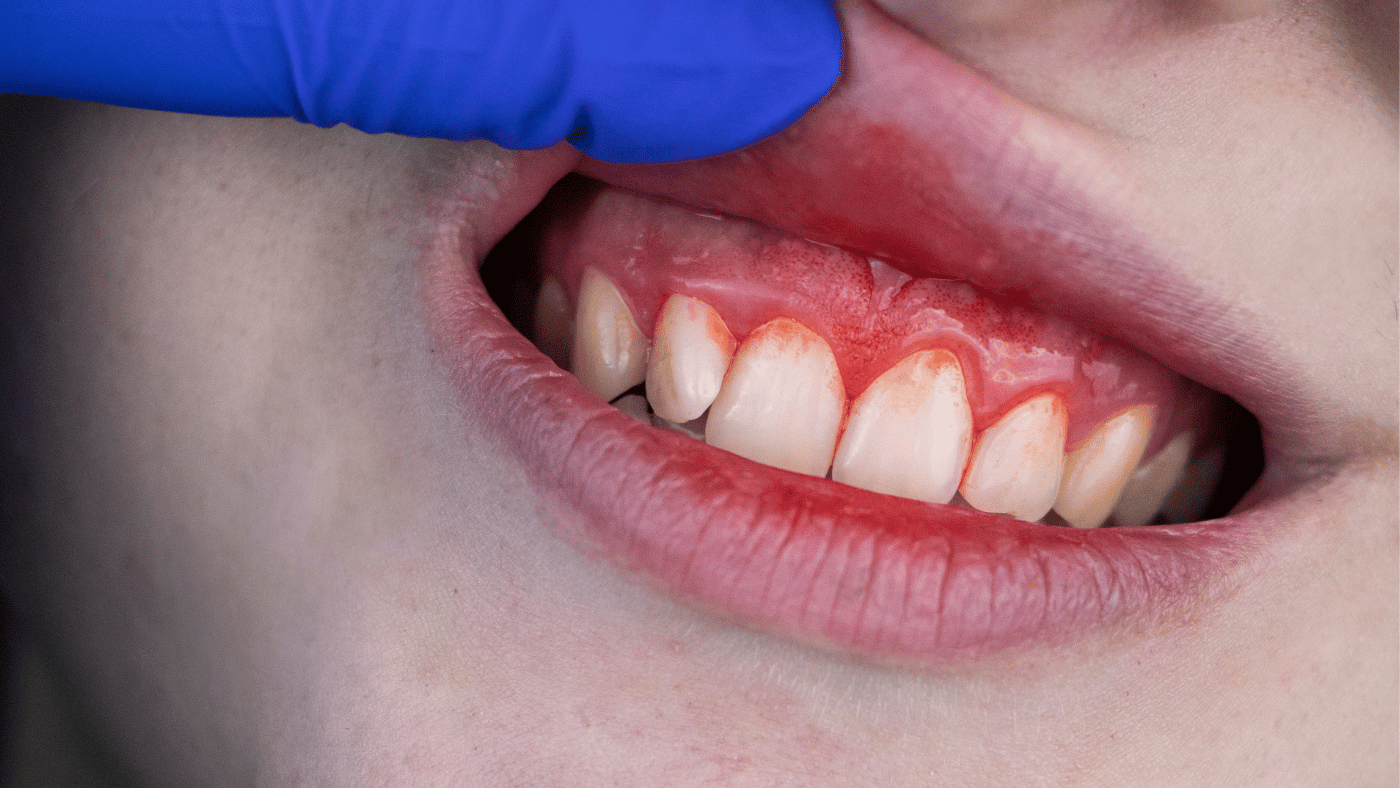
Bleeding gums are a common sign of periodontal disease. The stages of Periodontal Disease, also known as Gingivitis, begin when plaque builds up at the gum line and the gums become infected with plaque-bacteria. Next, you may notice some slight swelling and gum sensitivity. Lastly, is usually bleeding gums that occur when brushing or flossing.
Periodontal disease is avoidable when proper brushing and flossing technique is implemented. Some ways people make errors in technique are as follows, but not limited to:
- using a floss string that breaks easily
- applying too much pressure
- skipping hard to reach places
- rushing through the process
Keep in mind when brushing and flossing, gums are delicate, so even if you are brushing and flossing consistently, applying too much pressure may lead to bleeding even if Gingivitis isn’t the cause.
The American Dental Association provides more information about gum disease and some warning signs of disease progression that include; bleeding that continues to worsen after a week, gum recession, persistent bad breath, loose teeth and pain when chewing.
When to See a Dentist in Boca Raton for Bleeding Gums
If the bleeding is continuous for more than a few days, or you are facing problems like swelling, and persistent bad breath, these are all signs it’s time to visit your a dentist
Since bleeding gums can be an early sign of progressive gum disease, early treatment can prevent long-term dental problems. Bright Horizons Dental in Boca Raton helps you treat your gum disease. Contact our Boca Raton dentist office and bring your smile back so you can live pain free in the future.