5030 Champion Blvd, Ste. F5 Boca Raton, FL 33496.
 561-989-0107

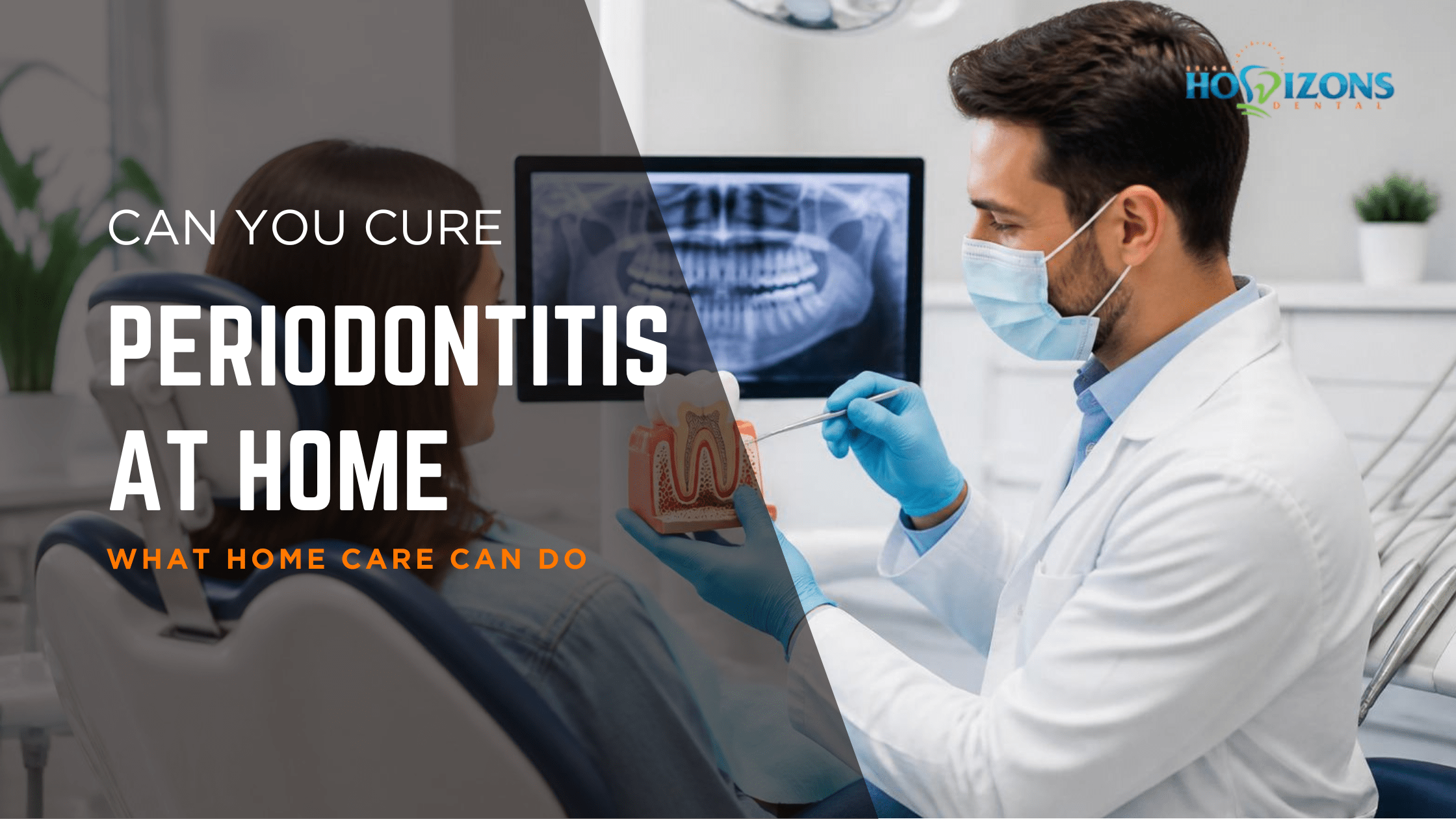
Can Periodontitis Be Cured at Home
Searching for a way to reverse gum disease without visiting a dental office is an understandable instinct. Treatment sounds expensive, schedules are tight, and the internet offers no shortage of rinses and remedies promising results. The honest answer matters here, because the difference between gingivitis and periodontitis determines whether home care can help at all. Home remedies can help with mild symptoms, but established periodontitis really needs professional periodontal disease treatment.
What Is Periodontitis
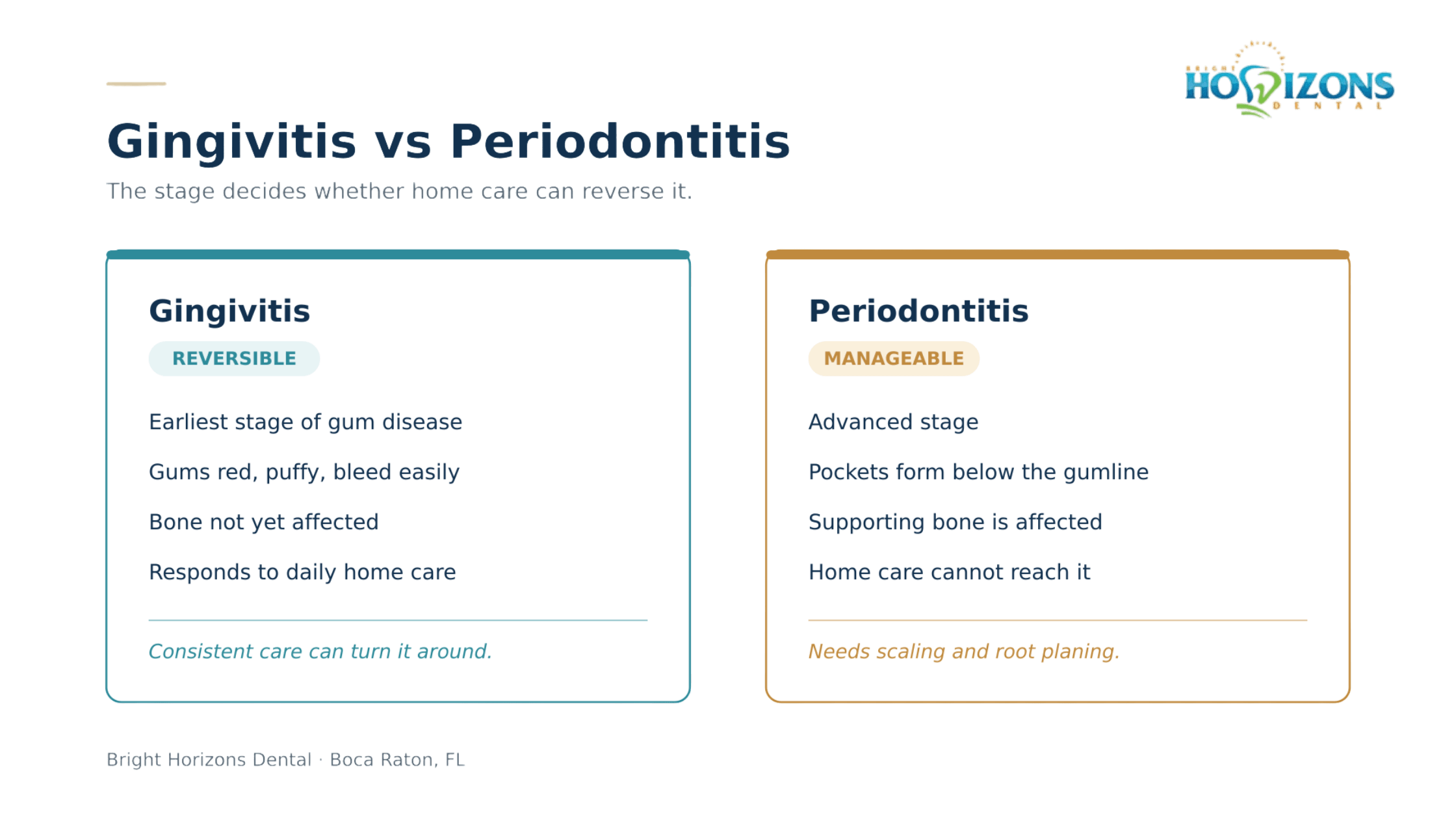
Periodontitis is advanced gum disease. It begins as gingivitis, when plaque along the gumline irritates the tissue and causes redness, swelling, and bleeding. Left untreated, that inflammation spreads beneath the gums, forming pockets that trap bacteria and gradually destroying the bone that holds teeth in place. The Cleveland Clinic describes this progression as the point where the condition shifts from reversible to manageable, which is the crux of the entire question.
Can Periodontitis Be Cured at Home
No, and stating that plainly serves patients better than encouragement would. Once periodontitis has developed, the tartar and bacteria sitting below the gumline cannot be reached by brushing, flossing, or rinsing, no matter how diligent the routine. Removing them requires professional instruments. The American Dental Association is consistent on this point, and any product claiming to cure advanced gum disease at home is making a promise it cannot keep.
There is a meaningful distinction worth holding onto, however. Gingivitis, the earlier stage, genuinely can be reversed at home with consistent care. Someone whose gums bleed occasionally and look slightly puffy may well be in that reversible stage, which is exactly why an evaluation matters before assuming the worst or dismissing it entirely.
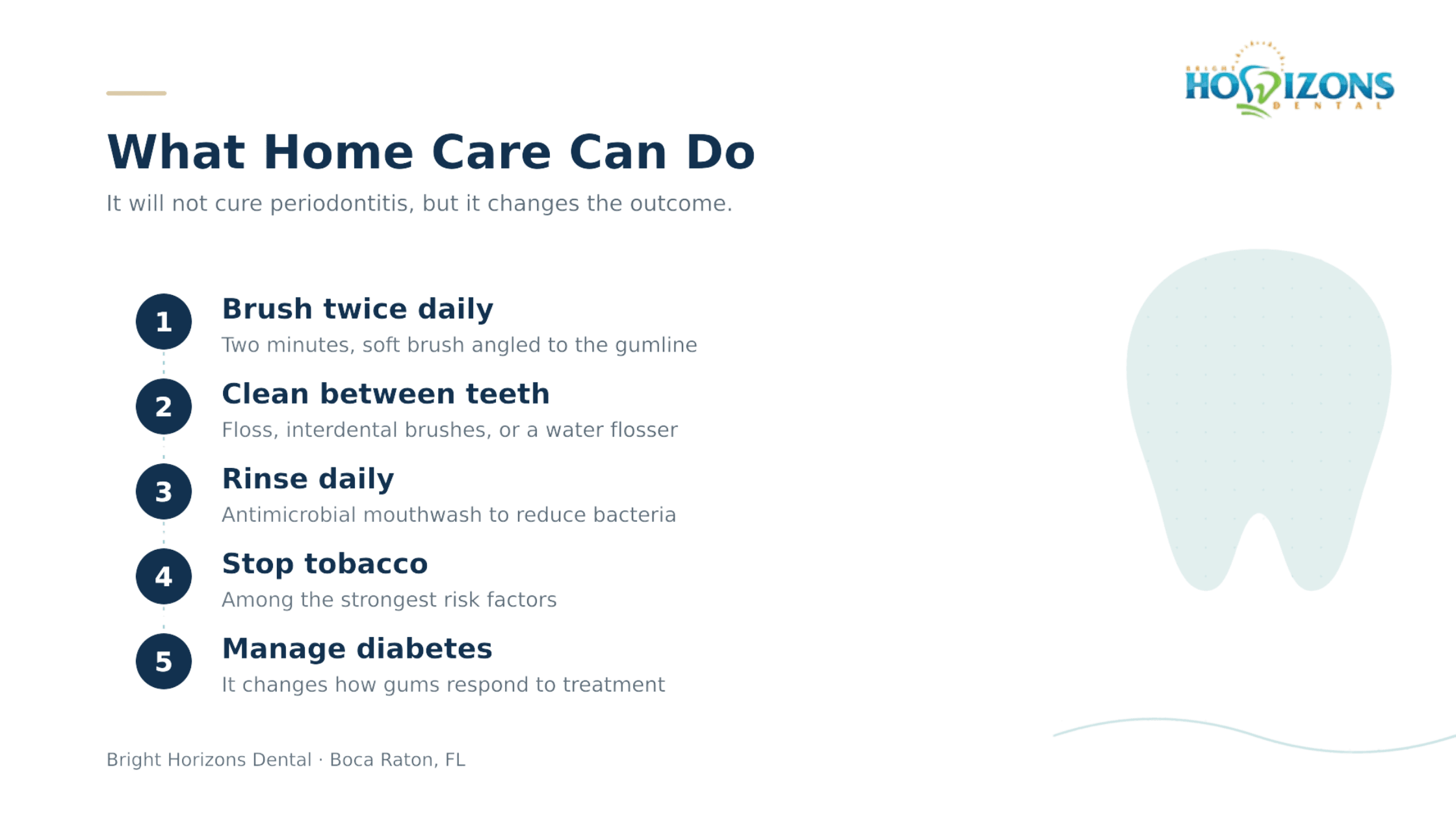
What Home Care Can Actually Do
Daily habits remain valuable even after periodontitis has been diagnosed. They will not cure the condition, yet they slow its progression, reduce inflammation, and substantially improve the results of professional treatment.
- Brush twice daily for two minutes with a soft brush angled toward the gumline.
- Clean between teeth every day with floss, interdental brushes, or a water flosser.
- Rinse with an antimicrobial mouthwash to reduce bacterial load.
- Stop using tobacco, which is among the strongest risk factors for gum disease.
- Manage conditions such as diabetes, which influence how gums respond to treatment.
The Mayo Clinic notes that consistent home care combined with professional treatment produces far better outcomes than either approach alone.
How Dentists Treat Periodontitis
Professional treatment is less daunting than many patients expect. Scaling and root planing, often called a deep cleaning, removes tartar from below the gumline and smooths the root surfaces so tissue can reattach. Most cases are handled this way, frequently across two visits with local anesthetic for comfort. More advanced situations may call for additional procedures, which a dentist will explain fully. Bright Horizons Dental provides periodontal gum disease treatment in Boca Raton tailored to the stage of the condition.
When to Stop Waiting
Certain signs indicate the condition has moved beyond what home care addresses. Gums that bleed regularly, appear to be receding, or feel tender warrant evaluation. So do persistent bad breath, teeth that feel loose, or a change in how teeth fit together when biting. Because gum disease is often painless until it is advanced, waiting for discomfort is a poor strategy. Regular dental cleanings catch these changes early, when they are simplest to address.
Gum Disease Treatment in Boca Raton
Understanding that periodontitis cannot be cured at home is not discouraging news. It is the information that leads to treatment that genuinely works. Patients throughout Boca Raton are welcome to contact Bright Horizons Dental for an evaluation, or to book an appointment and find out precisely which stage they are dealing with.