5030 Champion Blvd, Ste. F5 Boca Raton, FL 33496.
 561-989-0107


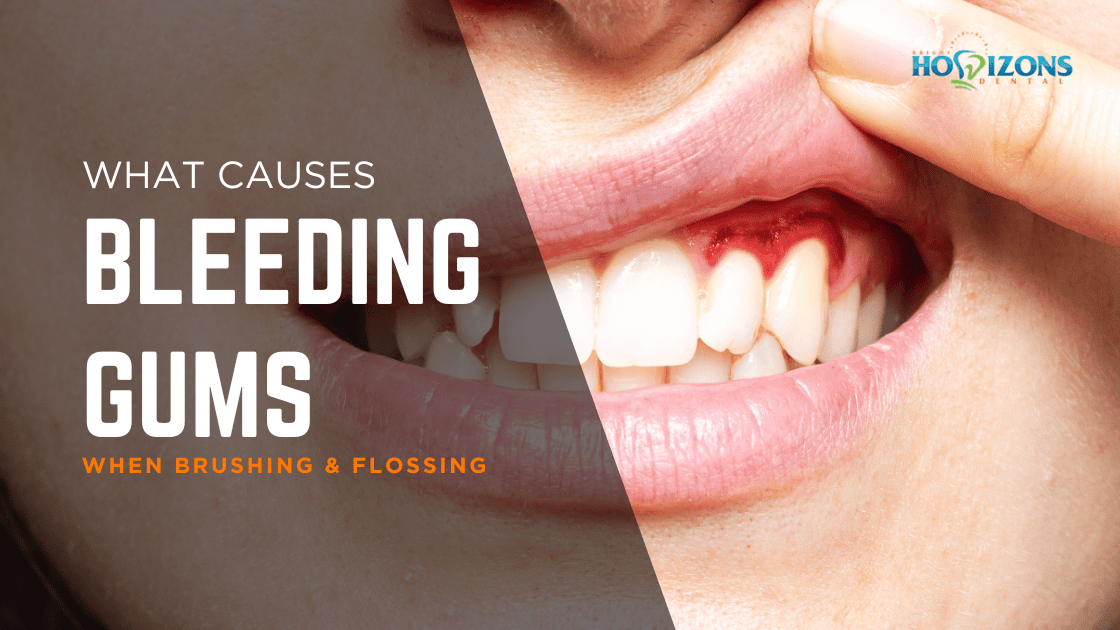
A tiny streak of pink in the sink while flossing tends to conjure up some concern. You may wonder, “Is something seriously wrong with my gums?” Well, for most patients, the answer to this question turns out to be one that is reassuring. While occasional bleeding of the gums is common, if your gums bleed day after day, maybe they’re showing you signs of a bigger issue that is worth tending to.
Ongoing bleeding is one of the clearest signs it’s time to look into gum disease care.
Is Bleeding Gums Normal When Flossing
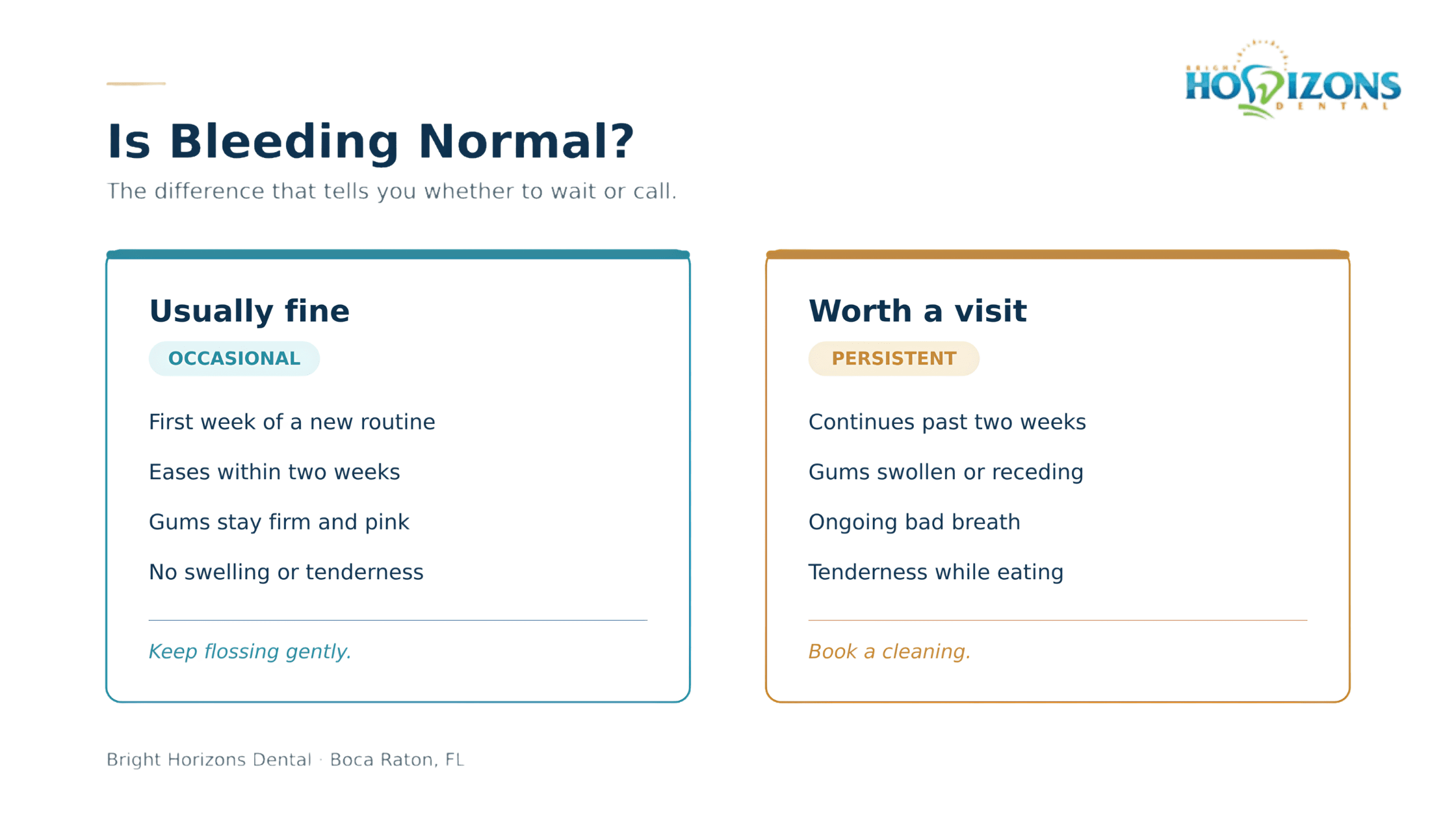
Healthy gum tissue should feel firm and stay put when cleaned. A little bleeding during the first week of a new flossing habit is expected, because the tissue is not yet conditioned and existing irritation is being disturbed. Persistent bleeding, on the other hand, usually means inflammation has taken hold along the gumline, most often from plaque that has been allowed to gather where the brush cannot easily reach.
Common Causes
New to Flossing
When flossing has been absent from a routine for a while, gums may protest at first. As circulation improves and irritation clears, that tenderness typically fades within a couple of weeks, provided the habit stays gentle and consistent.
Flossing Technique
Force is often the culprit. Snapping the floss down into the tissue or sawing it aggressively can wound otherwise healthy gums. A better approach guides the floss softly to the gumline, hugs it in a gentle curve against the side of each tooth, and moves it up and down without pressure.
Early Gum Disease
Beyond technique, the most frequent underlying reason is gingivitis, the earliest and most reversible stage of gum disease. Plaque that hardens into tartar keeps the gums irritated until they redden, swell, and bleed at the slightest touch. Trusted resources such as the American Dental Association and the Cleveland Clinic both emphasize that gingivitis caught early can be turned around, while neglected inflammation may advance toward the bone that anchors the teeth.
How to Stop It
Fortunately, the remedy is usually straightforward and lives right at home. Consistency does more than intensity ever could.
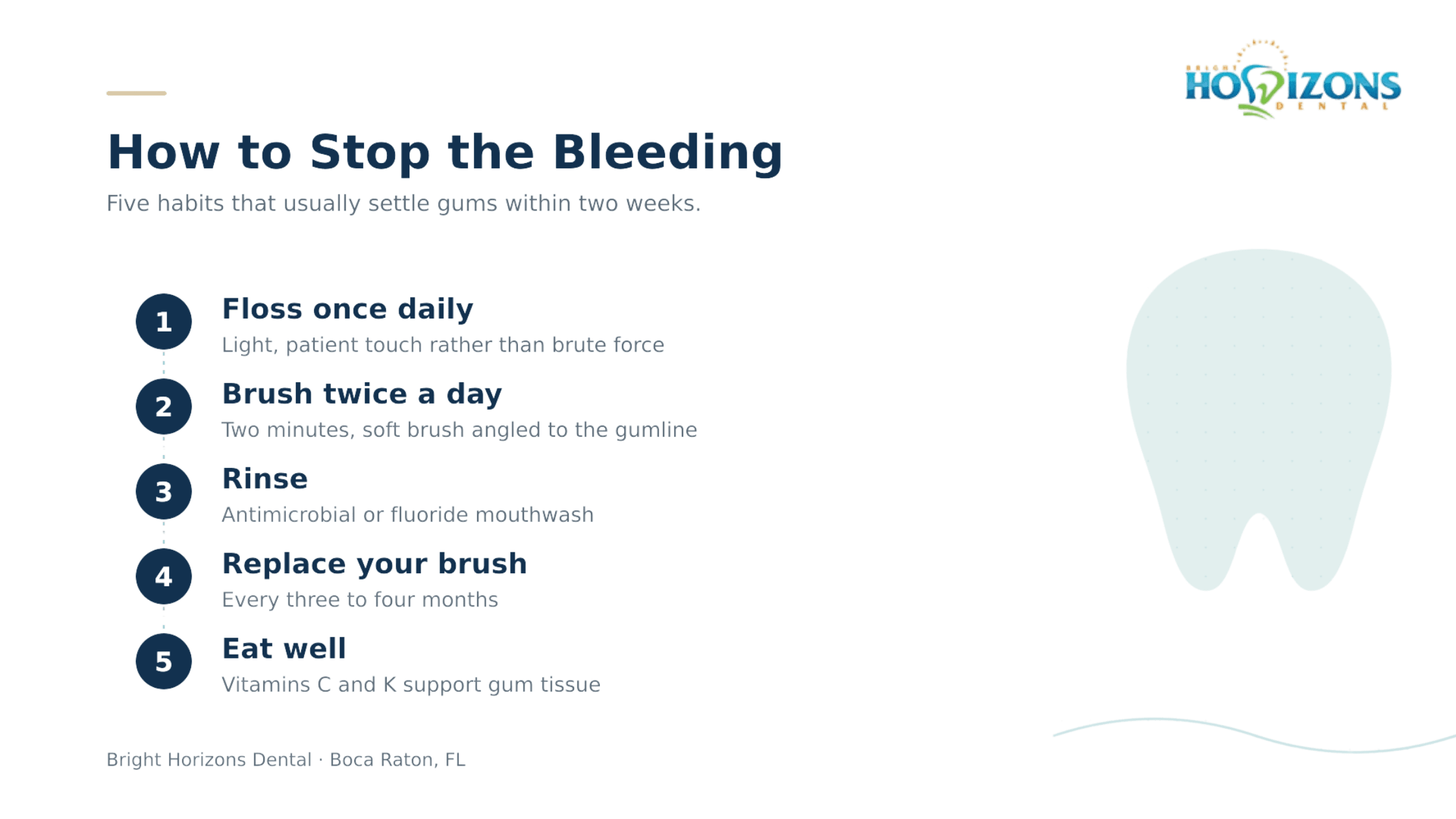
- Floss once daily with a light, patient touch rather than brute force.
- Brush twice a day for two minutes using a soft brush angled toward the gumline.
- Rinse with an antimicrobial or fluoride mouthwash to reduce bacteria.
- Replace the toothbrush every three to four months.
- Favor a balanced diet, since vitamins C and K support gum health.
Give these adjustments a week or two. As the inflammation calms, the bleeding should ease and then disappear. The Mayo Clinic notes that steady oral care is the foundation of reversing early gum trouble.
When to Get Care
Certain signs warrant a professional visit sooner rather than later. Bleeding that persists beyond two weeks of diligent care, gums that look swollen or appear to be pulling away from the teeth, ongoing bad breath, or any tenderness all suggest that inflammation has progressed and needs attention.
Care in Boca Raton
Persistent bleeding ranks among the most common and most treatable concerns a dental office sees. A thorough cleaning removes the hardened tartar that home care cannot, giving the gums the reset they need. Patients in Boca Raton are encouraged to contact Bright Horizons Dental to schedule a visit and restore healthy, comfortable gums.