5030 Champion Blvd, Ste. F5 Boca Raton, FL 33496.
 561-989-0107

Do You Need Special Floss for Bridges?
Practical tips for flossing around bridges
If you’ve just had a dental bridge installed and are wondering if you now require special floss to properly maintain your new bridge and overall oral health. The answer is: not everywhere, yet so frequently you will wish you could have your way made easier (and safer) by equipment to do the cleaning under and around bridges. Let’s understand this with Bright Horizons Dental.
Why normal floss might not cut it
One of the ways that your dentist can help replace a tooth that has been lost is through a dental bridge, which involves fixing an artificial tooth (or teeth) to other healthy teeth. Since the artificial tooth (the “pontic”) is where a tooth would have been, there is usually a gap below it that can not be reached by regular brushing. And that is where flossing comes in cleverly.
When you floss in the usual way (up-and-down motion between the teeth that are separated), you end up bleeding because you pull the floss too hard. That is even greater when there is a narrow or cramped area, such as under a bridge or a crown. Even normal floss may cause irritation to the gum tissue, shred, or otherwise fail to reach between the bridge.
So, yes! You may need special floss for a bridge or special tools to make your life easier and protect your gums.
What are your options?
Super floss or floss threaders are regarded as one of the most popular options. They have a stiff end, which enables them to maneuver the floss beneath your bridge easily, and then the soft part, which cleans gently. They are standard and helpful in accessing beneath the pontic.
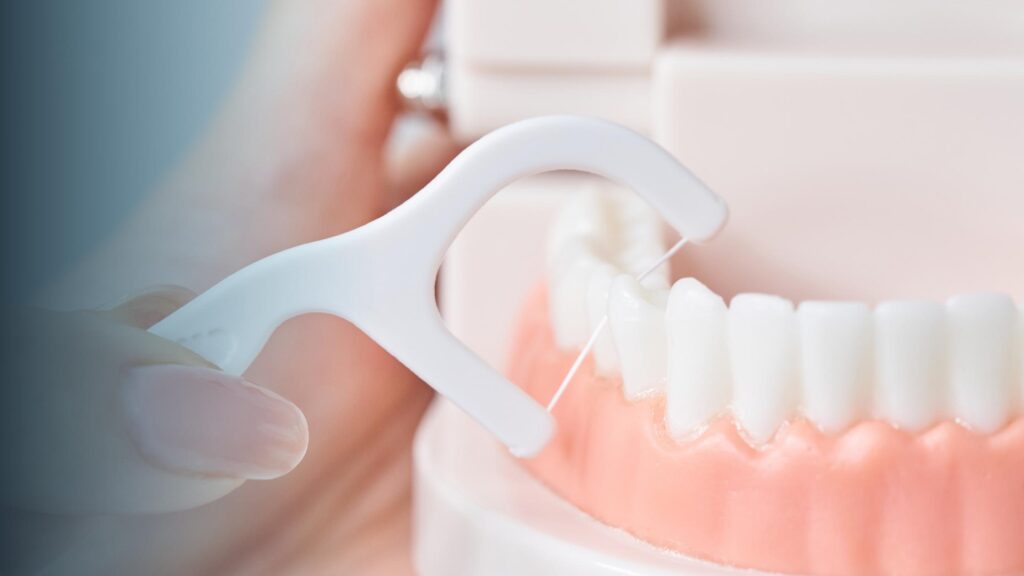
Floss picks, which are especially useful for use on bridges, are another valuable device. They are uniquely shaped to allow for more effective washing under the artificial tooth area. Water flossers (oral irrigators) are the perfect product if you experience pain or bleeding during the flossing process using your hands. A slow, massaging flow of water rinses the rubbish and bacteria found under the bridge (no pulling is needed).
Interdental brushes are also valuable for some individuals. These small brushes can be slipped under the bridge and between the teeth to scrape out any debris that is hidden, but they are only to be used when your dentist acknowledges that there is enough room to do so without any harm. Lastly, the crown floss or tape, which is broader, thinner, and softer than the usual floss, is particularly excellent in the area of the crown margins where space is limited. It helps maintain your gums and the edges of your crowns, keeping them clean and polished.
Practical tips for flossing around bridges
Thread gently. Do not push floss under the bridge; it can cause damage to the bridge or gum tissue.
- Once inserted, wrap the floss around the side tooth and scrub the sides.
- Use a back-and-forth motion, not a jerky yank.
- Rinse afterward to wash away loosened debris.
If you experience bleeding while flossing in the same spot consistently, stop and call your dentist. That could mean your gums are getting traumatized, or it may be that plaque is forming under the bridge.
Do you need special floss for a bridge in Monroe, NC?
For many patients with bridges, your regular floss is not enough. But “special” doesn’t mean In most cases, patients with bridges require a different type of floss than those without. However, special does not imply exotic or costly. It can simply be a floss style that is more suitable for bridges, such as super floss, threaders, or water flossers.
In case you are in Monroe, NC, schedule an appointment with our dentist at Bright Horizons Dental. Our dentist will demonstrate how to thread your floss, how to choose the right type, and how to avoid common problems. The goal is simple: keep your bridge and gums healthy, without fuss.