5030 Champion Blvd, Ste. F5 Boca Raton, FL 33496.
 561-989-0107

3D Dental Imaging Explained
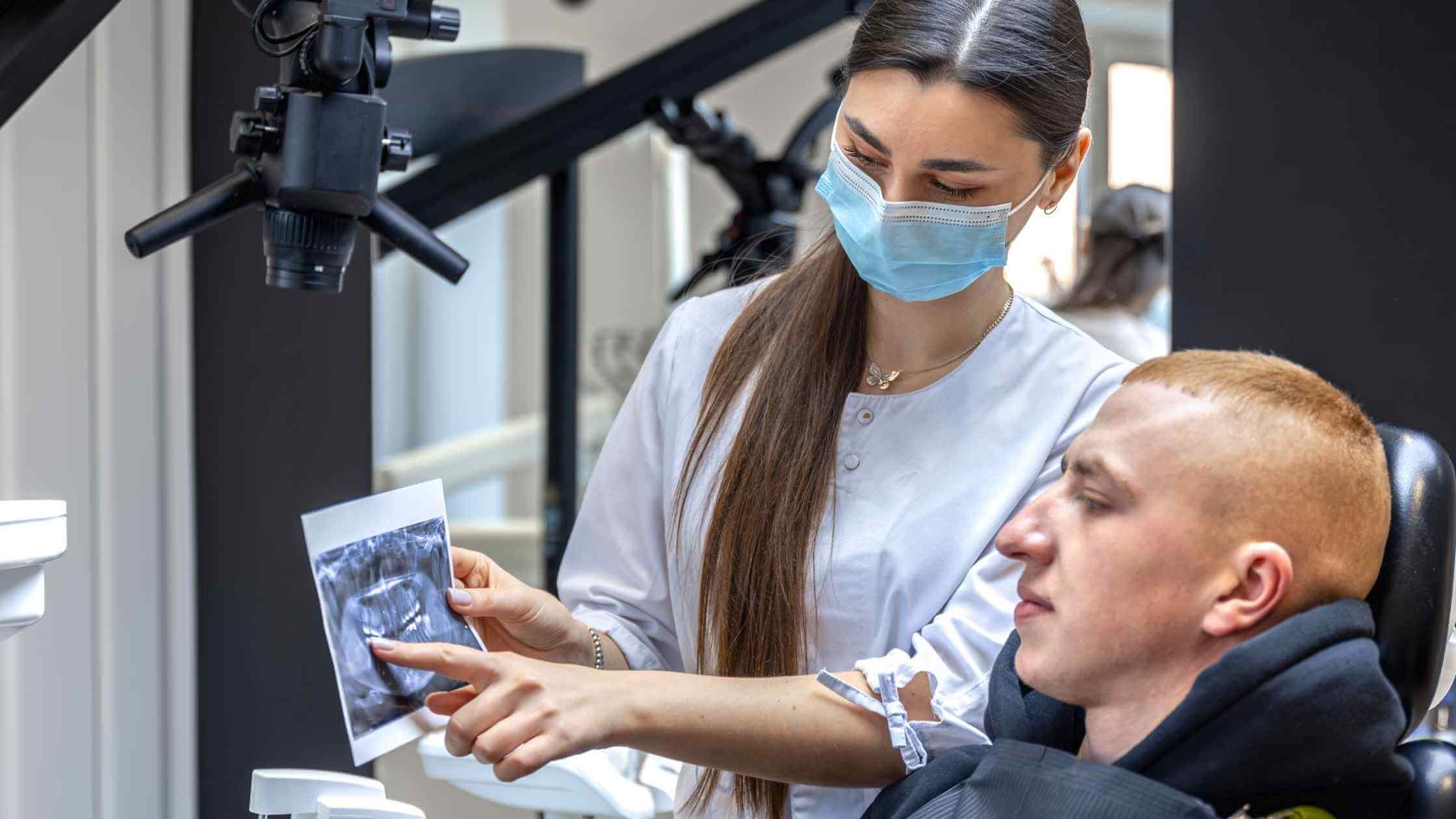
The mention of 3D dental X-ray for some patients at our Boca Raton Dentist office evokes the impression of worry and it’s natural to react that way when any type of radiation is brought up. Technology like 3D dental imaging gives our team a much clearer picture than traditional X-rays alone.
The positive aspect though, is that 3-D dental imaging is safe. This is allowed if a dentist uses it only when needed for a specific purpose and should order it only when these images will improve oral health care.
Is It Safe?
A dental X-ray, commonly referred to as CBCT, is a three-dimensional image of teeth, jawbone, roots, and other surrounding structures that cannot be done with a traditional two-dimensional image. That extra detail can make a meaningful difference, especially when anatomy is complex or treatment demands precision.
Simultaneously, it is not what all patients require when visiting a dentist, as CBCT is usually associated with exposing patients to more radiation as compared to the regular dental X-rays. This is precisely the reason why it is important that case selection is done carefully.
How Radiation Is Managed?
Safe 3-D imaging safety does not only deal with the machine. It is also about judgment. Dentists maintain the minimum radiation exposure that is reasonably possible and align the scan to the clinical question they need to answer. This means that a patient cannot be subjected to a 3D dental scan simply because the technology is available. It must be ordered by a dentist when this type of detailed image is likely to improve the diagnosis, treatment planning, or even the safety of a procedure.
When It Helps
The technology is particularly useful in those cases where a dentist has to examine the shape of the jaw, the location of the nerves, the bone thickness, or the precise angle of an affected tooth. It can be useful for dental implant planning, certain root canal cases, complex extractions, jaw evaluation, trauma, and situations where symptoms do not match what a regular X-ray shows. In these cases, a 2-D image can leave too much to guess. A three-dimensional view can sharpen the diagnosis and reduce surprises during treatment.
A Practical Example
Take the case of a patient who is going to have a dental implant. Outwardly, the area may look normal. Yet beneath the gumline, bone width may be limited, or a nerve may sit closer than expected. The 3D scan will show that concealed landscape prior to the start of treatment, which will assist the dentist to plan better and preserve critical structures. That’s where 3D dental imaging earns its value.
Who Needs It?
A child with a simple cavity, an adult getting a routine cleaning, or having a standard exam usually does not need 3D imaging. Conversely, it may be useful to a person with facial pain, complex history of root canals, missing teeth, undergoing implants, oral surgery or abnormalities that appear in a traditional X-ray. Good general dentistry does not have much to do with doing more. It is a matter of selecting the right tool in the right situation.
At Bright Horizons Dental, when a patient seeks a dentist in Boca Raton, FL, he or she can be assured that advanced imaging will complement care when it’s employed.
Bright Horizons Dental in Boca Raton positions itself as a place of personalized quality dental care and with the latest equipment. For patients, that matters because safety is as much related to clinical judgment as it is to the scan. Once a dentist explains why he/she needs a 3D image, what question it will answer, and how it will improve treatment, the decision to rely on it becomes much easier. Book an appointment with us to talk to Dr. Martone about including 3-D xrays in your dental services care plan.